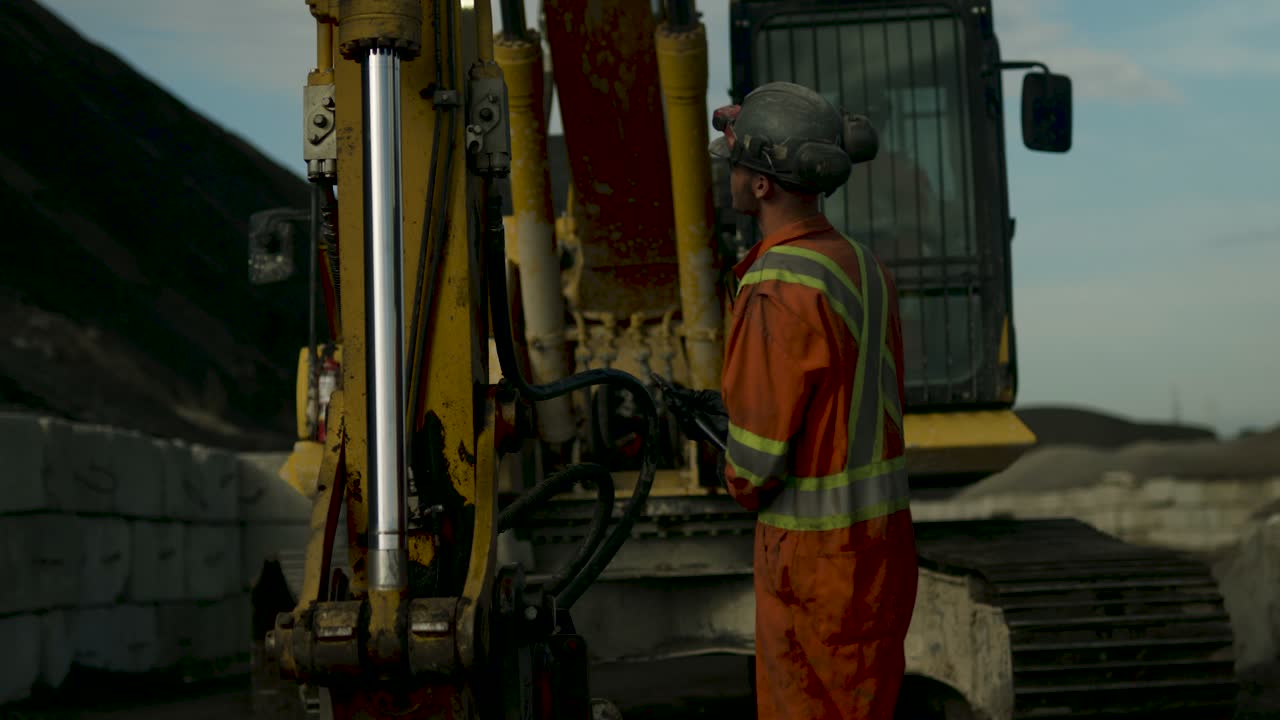
ARRO crew member climbing onto an excavator on an active construction site
Real footage · ARRO crew on site

Construction & Civil Contractors

Mobile Crushing

For Construction & Civil Contractors.

Process it on site.

Keep the project moving.

Arro provides mobile concrete and rock crushing for civil contractors and construction projects where processing material on site can reduce hauling, recover usable aggregate, and simplify material handling.

Check Project Fit & Availability

Tell us what material you have, the approximate tonnage, project location, and desired finished product. We'll help determine whether onsite crushing makes operational and financial sense.

Scroll
On-Site Crushing
Concrete & Rock
2,000+ Tonnes/Day Typical Recycling Production
Ontario-Wide Service

On-Site Crushing

Before you haul it out, run the numbers.

Demolition concrete and excavated rock have to go somewhere.

One option is to load it, truck it off site, pay the associated hauling and disposal costs, then bring aggregate back to the project when it's needed.

On the right project, there's another option.

Arro can process suitable material directly on site, turning material you already have into aggregate that may be reused on the project while reducing unnecessary trucking and material handling.

Less material leaving site

Process suitable concrete or rock where it's generated instead of automatically hauling it away.

Less material coming back

When the processed material can be reused on the project, you may reduce the amount of aggregate that needs to be purchased and trucked in.

Fewer truck movements

Keeping material on site can reduce truck movements, site traffic, and the coordination required to move large volumes of material on and off the project.

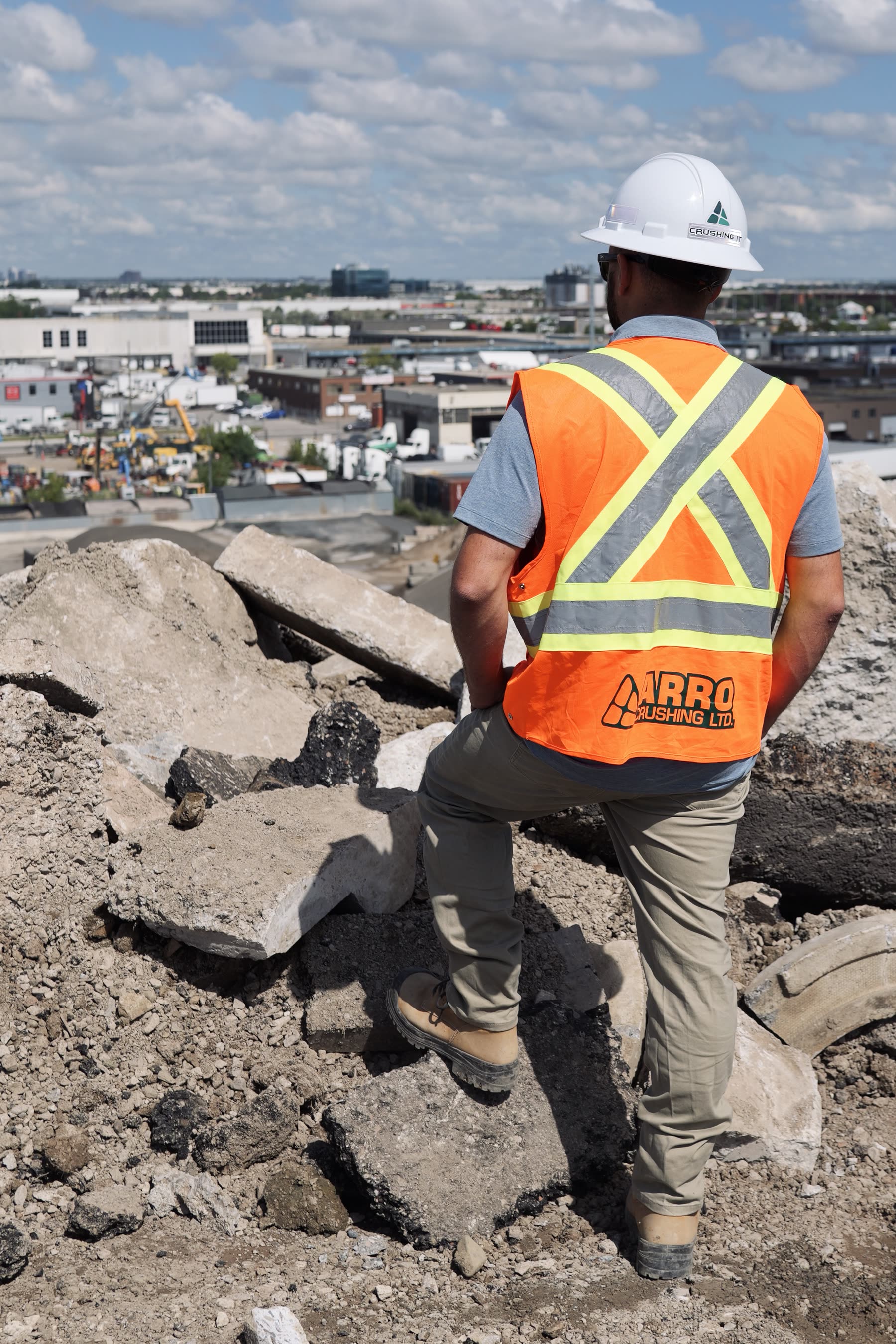
ARRO crew member standing on a pile of demolition concrete on an urban job site
Demolition concrete · On site

When On-Site Crushing Makes Sense

Enough material can change the economics.

Mobile crushing isn't the right answer for every project.

Mobilizing a crushing spread comes with costs of its own. On smaller jobs, hauling material to a recycling yard may still be the simpler and more economical option.

As material volumes increase, the economics can change.

As a general guideline, projects below approximately 8,000 tonnes may be more economical to haul. The actual decision depends on the project.

01

Material Volume

How much suitable concrete or rock needs to be processed?

02

Haul Distance

How far would the material otherwise need to travel?

03

Disposal Costs

What will it cost to haul and dispose of the material off site?

04

Material Reuse

Can the processed aggregate be used elsewhere on the project?

05

Replacement Aggregate

How much material would otherwise need to be purchased and hauled back in?

06

Site Conditions

Is there enough space to safely operate a mobile crushing spread and manage the material?

Not sure which option makes more sense? We'll review the project with you before recommending a crushing setup.

Check Project Fit & Availability

Turn Existing Material Into Something Useful

Get more value from material already on site.

Concrete and rock don't always need to leave the project to have value.

When the material and project requirements are suitable, Arro can process it into usable aggregate for the next stage of work.

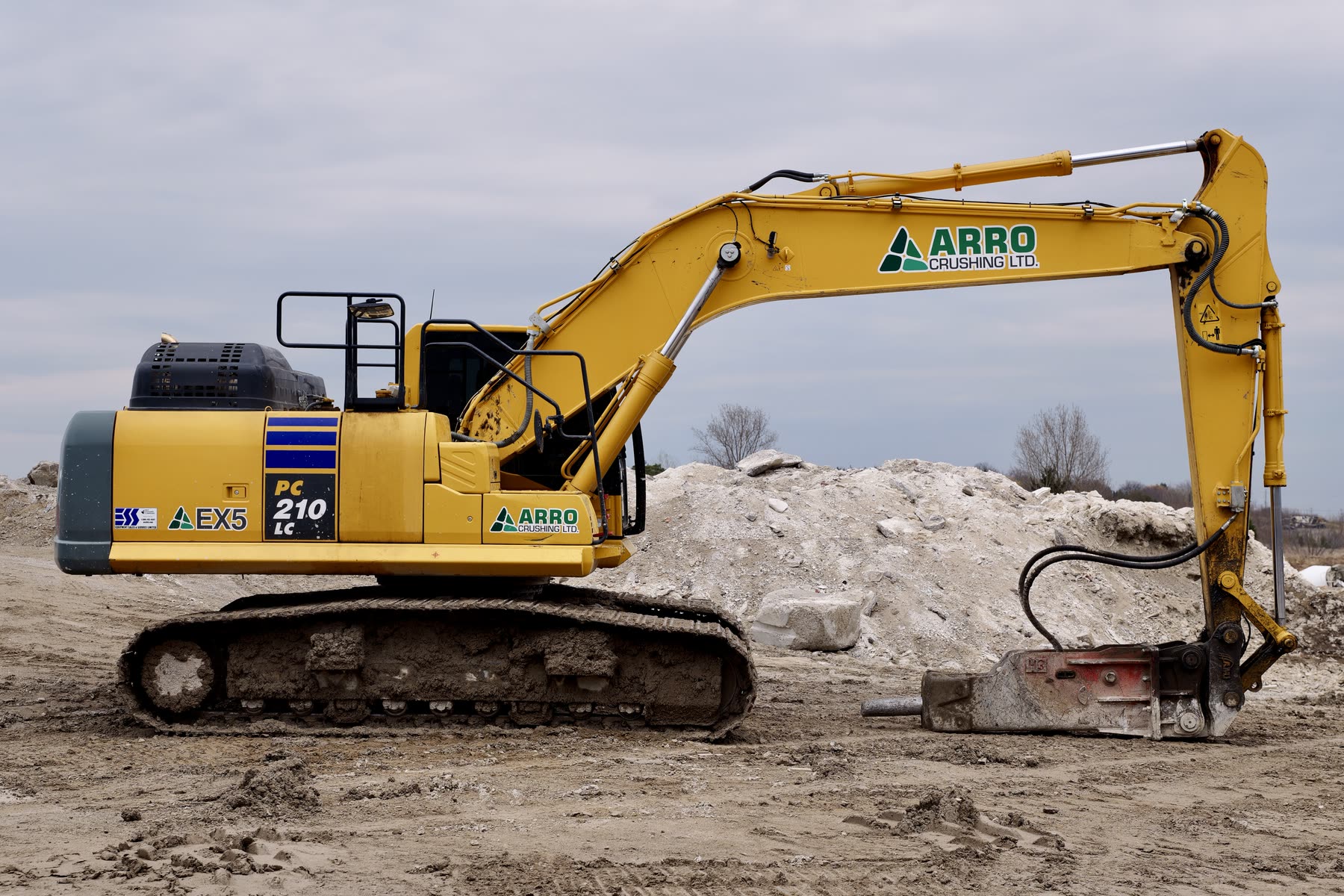
ARRO excavator with a breaker working through demolition concreteRemovals

Demolition Concrete

Process concrete from demolition or removals into recycled aggregate instead of treating all of it as waste.

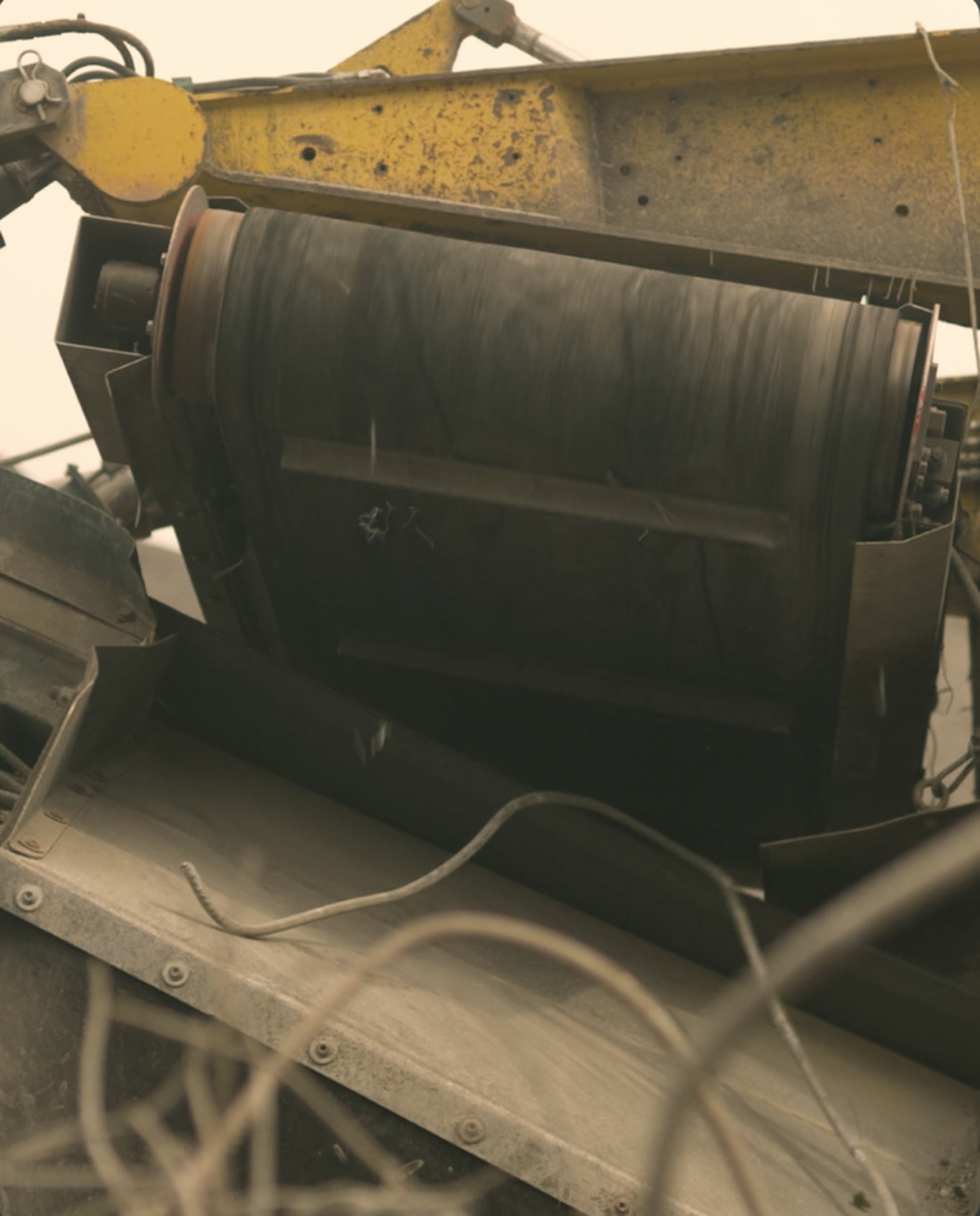
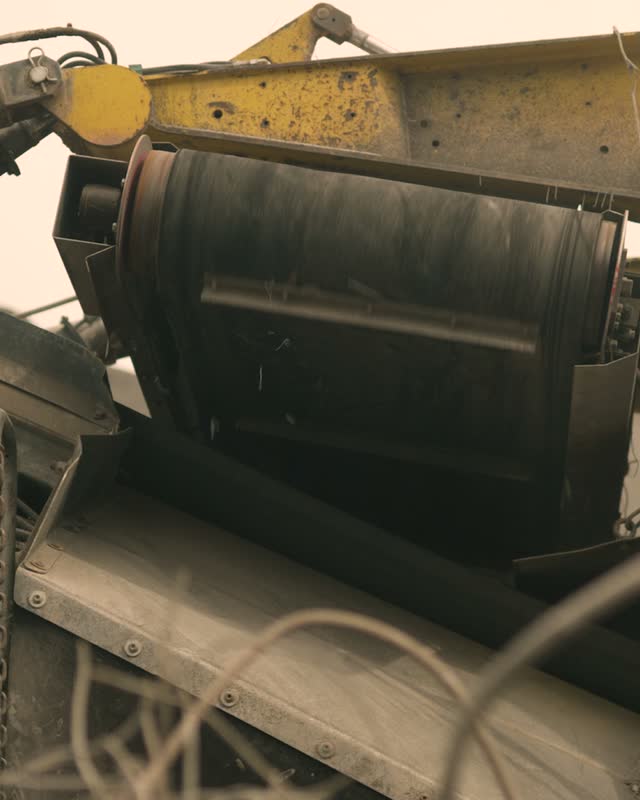
Magnetic separator on the ARRO crusher pulling rebar and wire off the beltRebar & Wire

Reinforced Concrete

Arro's impact crushers can process reinforced concrete, using magnets to separate rebar and wire from the processed material.

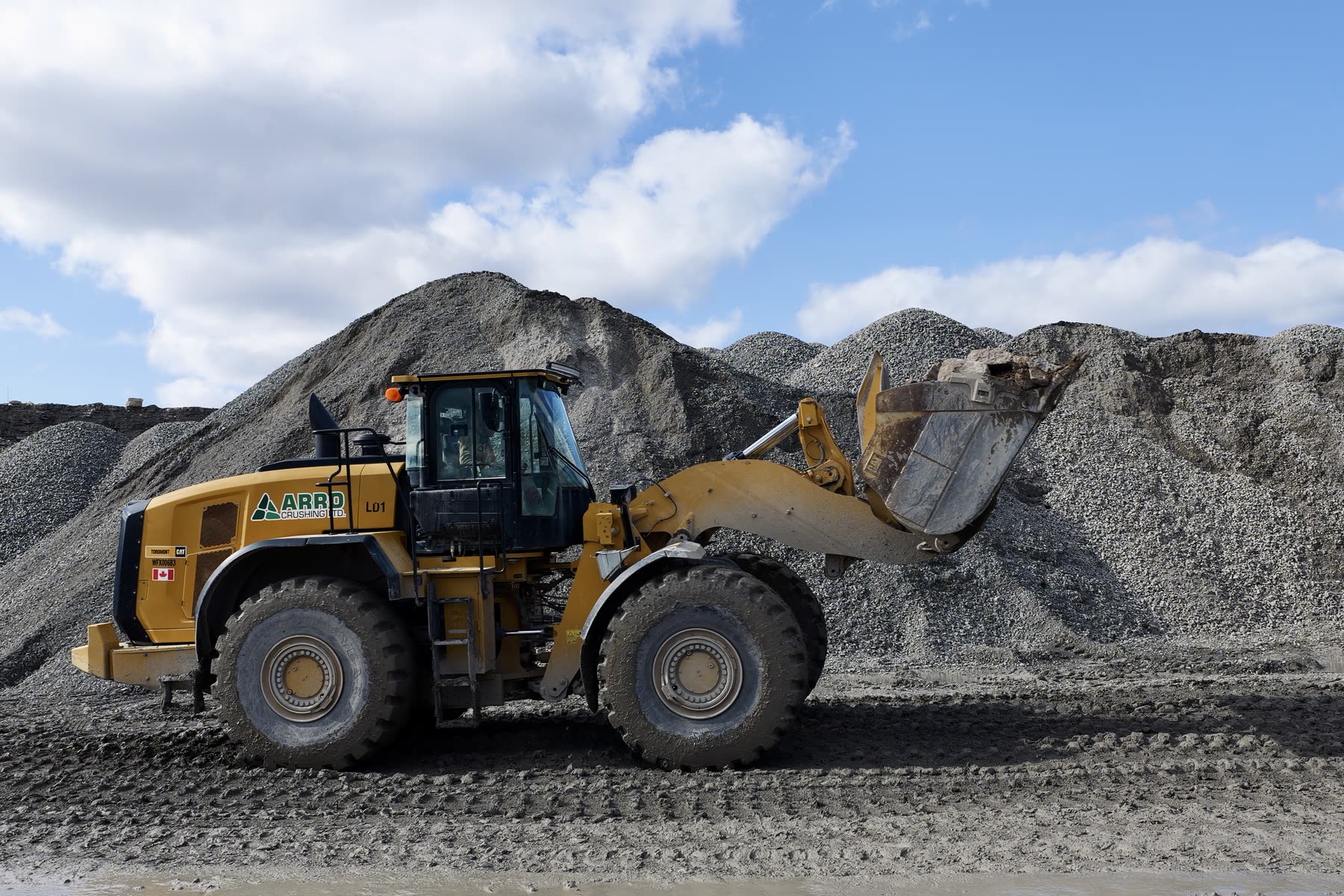
Wheel loader with a full bucket of excavated rock at a stockpileExcavation

Excavated Rock

Process suitable rock generated during excavation into aggregate that may be used elsewhere on the project.

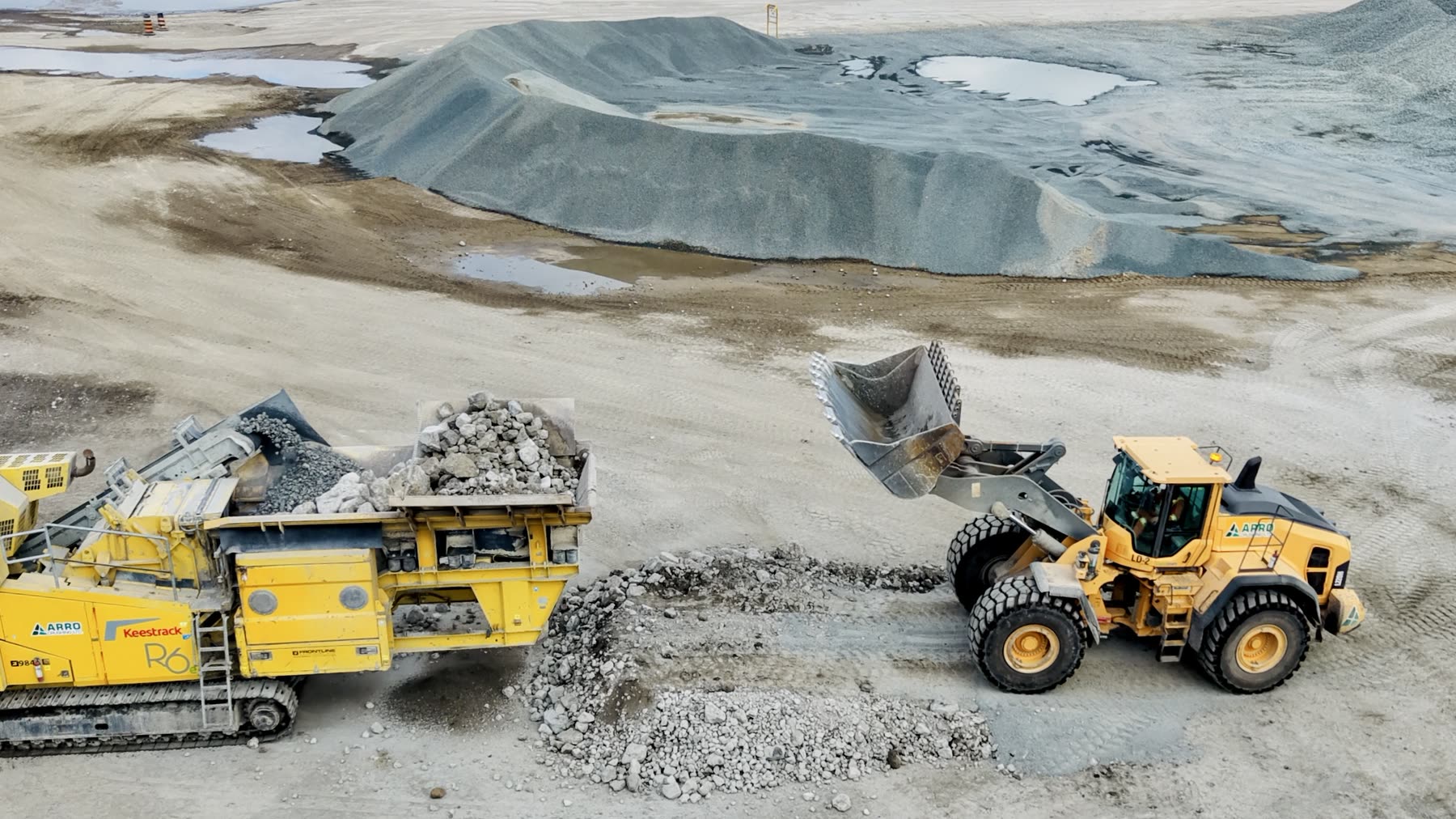
Aerial view of an ARRO crusher and loader working large stockpilesVolume

Large Stockpiles

Work through accumulated concrete or rock when material volume makes on-site processing more practical than continued hauling.

Potential reuse depends on the incoming material, required finished product, project specifications, and intended application.

Why Contractors Work With Arro

Crushing should solve a problem, not create another one.

Bringing another subcontractor onto an active project adds another crew, another schedule, and another operation that has to fit around everything else happening on site.

Our job is to get the crushing done without making the rest of the project harder to run.

01

Fast, Efficient Production

Our crews are built to put material through the plant and keep production moving as often as possible.

02

Compact Mobile Equipment

Mobile crushing spreads allow us to work within suitable active job sites without requiring the footprint of a large stationary plant.

03

Responsive Scheduling

Construction schedules change. When dates move or site conditions affect the plan, we communicate early and adjust where crew and equipment availability allows.

04

Preventative Maintenance

We focus on maintenance before mobilization to reduce avoidable equipment downtime once crushing begins.

05

Safety Built Into The Work

We work within site safety requirements and keep safe operation part of the job from planning through production.

06

Professional Crews

Our crews understand they're working inside a larger project and are expected to respect site requirements, other trades, traffic, equipment, and your team.

07

Straightforward Communication

If production issues, site conditions, or scheduling changes affect the plan, we communicate early and work toward a practical solution.

London · ARRO reel

Built For Active Job Sites

Your project doesn't stop because the crusher shows up.

Excavators are working. Trucks are moving. Other trades need access. Material is being generated while schedules continue to change.

The crushing operation has to fit into that environment.

Before mobilizing, Arro reviews the planned crushing area, access, material location, equipment requirements, traffic, water requirements, and production goals with your team.

From there, we establish a setup designed to keep material moving without unnecessarily tying up access, traffic, workspace, or other trades.

01

Site Planning

Review access, equipment layout, material flow, stockpile locations, and working space before mobilization.

02

Compact Setup

Mobile equipment gives the crushing crew more flexibility when space is limited or site conditions change.

03

Coordination

Work with the project team so crushing activity fits into the broader construction schedule.

04

Clean Closeout

Once crushing is complete, our goal is to leave the work area clean and ready for the next stage of the project.

Product Requirements

Start with what you need the material to do.

Crushing material isn't useful if the finished product doesn't have a purpose.

Before production begins, we review the incoming material, required finished product, intended use, screen requirements, site conditions, and production goals with your team.

During production, we monitor the material and stay in communication as conditions change.

Depending on the feed material and project requirements, processed material may be suitable for applications such as granular fill, recycled aggregate, or other project-specific uses.

The project specification and intended application ultimately determine whether processed material can be reused. That is something we want understood before production begins, not after the material has already been crushed.

Processed Material May Suit

  • Granular fillSubject to spec
  • Recycled aggregateSubject to spec
  • Project-specific usesReviewed before crushing

Reuse depends on the incoming material, required specification, intended application, and project requirements.

Reinforced Concrete

Rebar doesn't mean the concrete has to leave site.

Demolition and civil work often produces reinforced concrete that still has aggregate value.

Arro's impact crushers are equipped with magnets that separate rebar and wire from the processed material, allowing suitable reinforced concrete to be crushed into reusable aggregate.

Rebar and reinforcement conditions vary from project to project, so we review the material before mobilization and determine the appropriate approach.

Scroll to watch the magnet work

Magnetic separator on the ARRO crusher lifting rebar and wire off the belt
Up to0% Rebar and wire removal using magnetic separation Actual separation depends on the material and operating conditions.

Demolition and civil work often produces reinforced concrete that still has aggregate value.

Arro's impact crushers are equipped with magnets that separate rebar and wire from the processed material, allowing suitable reinforced concrete to be crushed into reusable aggregate.

Rebar and reinforcement conditions vary from project to project, so we review the material before mobilization and determine the appropriate approach.

Production & Scheduling

Once we're on site, the goal is to get through the material.

Contractors don't need a crushing spread sitting on the project longer than necessary.

In recycling applications, Arro typically produces approximately 2,000 tonnes per day, depending on the incoming material, required finished product, site conditions, equipment configuration, and how material is presented to the crusher.

2,000+tonnes/dayTypical Recycling Production
13+hours/dayTypical Production Schedule
6days/weekTypical Operating Schedule
2–3peopleTypical Arro Crushing Crew

For suitable projects and sites that permit extended operating hours, additional shifts may also be considered when the schedule requires more production.

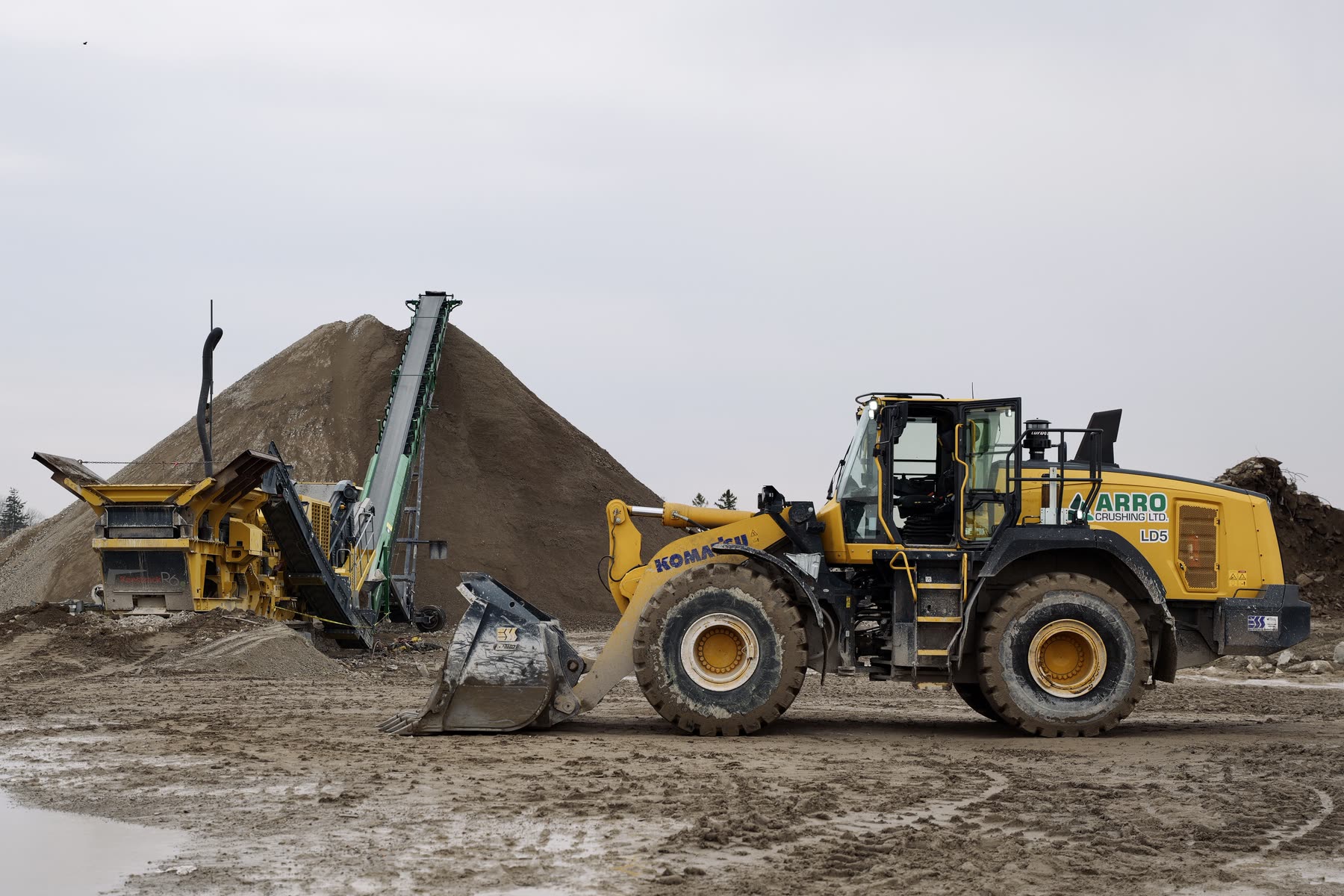
ARRO wheel loader feeding the mobile crusher beside a stockpile on site
Feeding the plant · On site

A Good Fit For Arro

Is your project a good fit?

Arro is particularly well suited for construction and civil projects with:

  • Significant volumes of concrete or suitable rock
  • Material that would otherwise require substantial hauling
  • Opportunities to reuse processed aggregate on site
  • Demolition or removal concrete requiring processing
  • Enough working space for a mobile crushing operation
  • Clear production requirements
  • Projects where reducing truck movements can ease site traffic and logistics
  • Projects that benefit from processing material where it's generated

If your project is smaller, hauling may still make more economic sense. We would rather determine that before mobilization.

FAQ

Frequently Asked Questions

Straight answers on tonnage, reuse, rebar, space, water, and what it takes to get a crusher on your project.

How much material do I need for on-site crushing to make sense?+

There isn't a single cutoff that applies to every project.

As a general guideline, projects below approximately 8,000 tonnes may be more economical to haul to a recycling yard.

Haul distance, disposal costs, potential material reuse, replacement aggregate costs, site conditions, and project schedule all affect the decision.

If you're unsure, contact us with the approximate quantity and project location and we'll help you evaluate the crushing option.

What materials can Arro process on a construction site?+

Arro's mobile equipment is commonly used to process concrete and suitable rock.

Before quoting the project, we'll review the material, estimated tonnage, required finished product, and intended use to determine whether our equipment is appropriate.

Can Arro crush reinforced concrete?+

Yes. Our impact crushers are equipped with magnets that separate rebar and wire from processed concrete, allowing reinforced concrete to be crushed into reusable material.

Can we reuse the crushed material on our project?+

Potentially. Whether processed material can be reused depends on the incoming material, required specification, intended application, and project requirements.

We review what you're trying to produce before crushing begins so the production plan can be built around the intended use.

How much can you crush per day?+

In recycling applications, Arro typically produces approximately 2,000 tonnes per day.

Actual production depends on the feed material, required finished product, site conditions, equipment configuration, and how material is presented to the crusher.

How much room do you need?+

Space requirements depend on the crushing spread, material volume, stockpile layout, traffic, and equipment required for the project.

Arro uses compact mobile equipment, but we still need adequate space to operate safely and move material efficiently. We'll review the proposed crushing area before mobilization.

What equipment do you bring?+

A typical crushing spread may include:

  • Impact crusher
  • Screener
  • 100-foot stacker
  • Wheel loader
  • 20-ton excavator with attachments

The exact equipment depends on the material, finished product, site conditions, and production requirements.

Do we need to supply equipment?+

Typically, Arro brings the crushing spread and support equipment required for the planned work.

If your project already has equipment or operators that could be incorporated into the production plan, we can discuss that before quoting the job.

Do we need to provide water?+

If water is required for dust suppression, you can provide a suitable connection within approximately 30 metres of the crushing area, or Arro can arrange water supply for an additional cost.

How do you charge?+

Most Arro crushing projects are billed by the tonne of finished product.

Our conveyors are equipped with belt scales that track material as it's produced, giving both teams a clear record of production.

How much notice do you need?+

Projects are typically scheduled several weeks in advance.

For planned construction work, earlier notice gives us more opportunity to coordinate crushing with your project schedule. Shorter notice may be possible depending on equipment and crew availability.

Does Arro have Environmental Compliance Approvals?+

Yes. Arro maintains multiple Environmental Compliance Approvals to support mobile crushing operations at different sites across Ontario.

We'll review the environmental and site requirements relevant to the planned work before mobilization.

How far does Arro travel?+

Arro regularly works throughout Southern Ontario and travels across the province when the project volume and logistics make sense.

What information do you need to quote the project?+

It helps to have:

  • Material type
  • Approximate tonnage
  • Required finished product
  • Intended use of the processed material
  • Project location
  • Available crushing area
  • Desired start date
  • Desired completion date

You don't need every detail figured out before contacting us. We'll review the project with you and determine what else is needed before providing pricing.

Let's Talk

Before you haul it away, find out what it's worth on site.

If your project has a significant volume of concrete or rock, let's compare the cost and logistics of processing it on site versus hauling it away and bringing aggregate back in.

Tell us what material you have, the approximate tonnage, project location, and desired finished product. We'll help determine whether onsite crushing makes operational and financial sense.